
How the Tradition Designed Its Entry Points
One difficulty students commonly face when entering a new subject is the weight of initial access. Take Arabic, a student is introduced to the science, handed a thick book (sometimes over a hundred+ pages) and told he/she has a year ahead before reaching the end. And that is just one text. Often they are covering two simultaneously, one for ṣarf and one for naḥw.
This is where late-classical curricula designed by specialist scholars of pedagogy distinguish themselves. They form carefully considered rings of study within a subject, some areas come before others, checkpoints are not stretched out very long, and the works chosen complement one another in such a way that malakah grows steadily, no gaps are left, and no student feels overwhelmed. Study advances tadarrujan, step by step, as it was always meant to.
This is precisely what Mullā Niẓām al-Dīn al-Sihālawī did with the Arabic curriculum. Mīzān al-Ṣarf forms the entry point into the language, covering the full range of verbal forms; past, imperfect, imperative, and prohibitive, alongside the derived nouns, in a concise presentation that is easily digestible. This is done in just 21 pages. Within a few months, a student feels a genuine sense of accomplishment, but also recognises that there is a next step waiting for him.
That next step is Munsha'ib. Here, students encounter newer concepts such as ilḥāq because they are well prepared to, and are given the full morphological map needed to situate Arabic verbs within the wider system of the language. Again this happens in just eleven pages.
As ṣarf studies continue, the student now has the zād-i rāh (the provision for the road) to engage with naḥw in a way that will truly benefit him. Again, this is not done through a hundred+ pages, but just thirty, benefitting from Mīr Sayyid Jurjānī's mastery of authorship, and his ability to transmit the foundations of a subject to the novice student, in a way that prepares them for the advanced works ahead.
The beauty of these texts is that they are time-tested. For centuries, scholars passed through them within a pedagogy that consistently produced results.
These are the exact texts of our One-Year Classical Arabic Programme, launching this September, in shā' Allāh, and by the end of it, students will be in a position to read and parse passages of classical Arabic texts without tashkīl. In shā' Allāh.
Full details here — early bird offer available until 18 July.
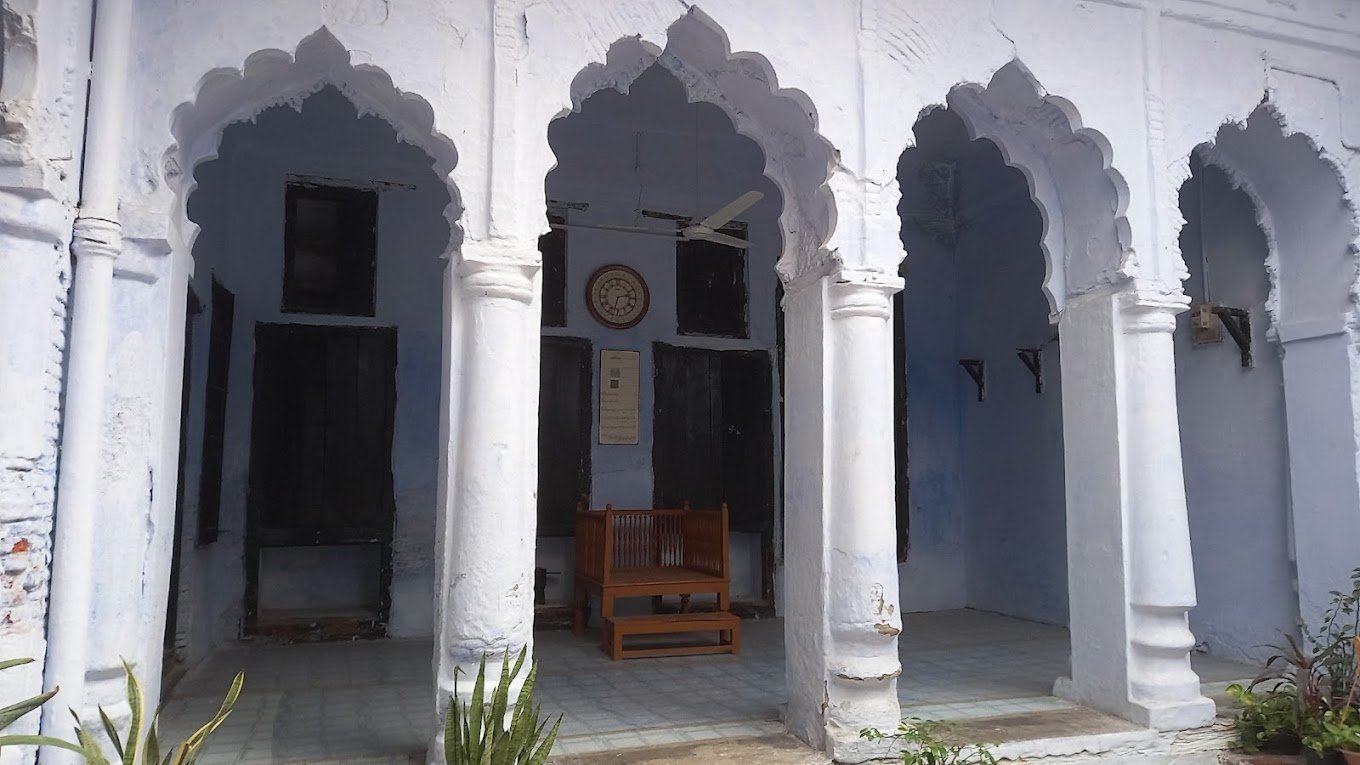
The Farangī Maḥall, Lucknow, India; with the farmān issued by Mughal Emperor Awrangzīb displayed on the wall.
