
Teaching Toward Mastery: The Khairabādī Pedagogy of the Rational Sciences
During a recent trip to the KPK province of Pakistan, Shaykh Muhammad Mubashir Iqbal had the honour of sitting in the classes of an inheritor of the Subcontinent’s Farangī Maḥall tradition, Shaykh al-Ḥadīth Faḍl al-Subḥān al-Qādirī al-Khairabādī. The Shaykh delivered a Khairabādī masterclass on two core works of the Farangī Maḥall curriculum.
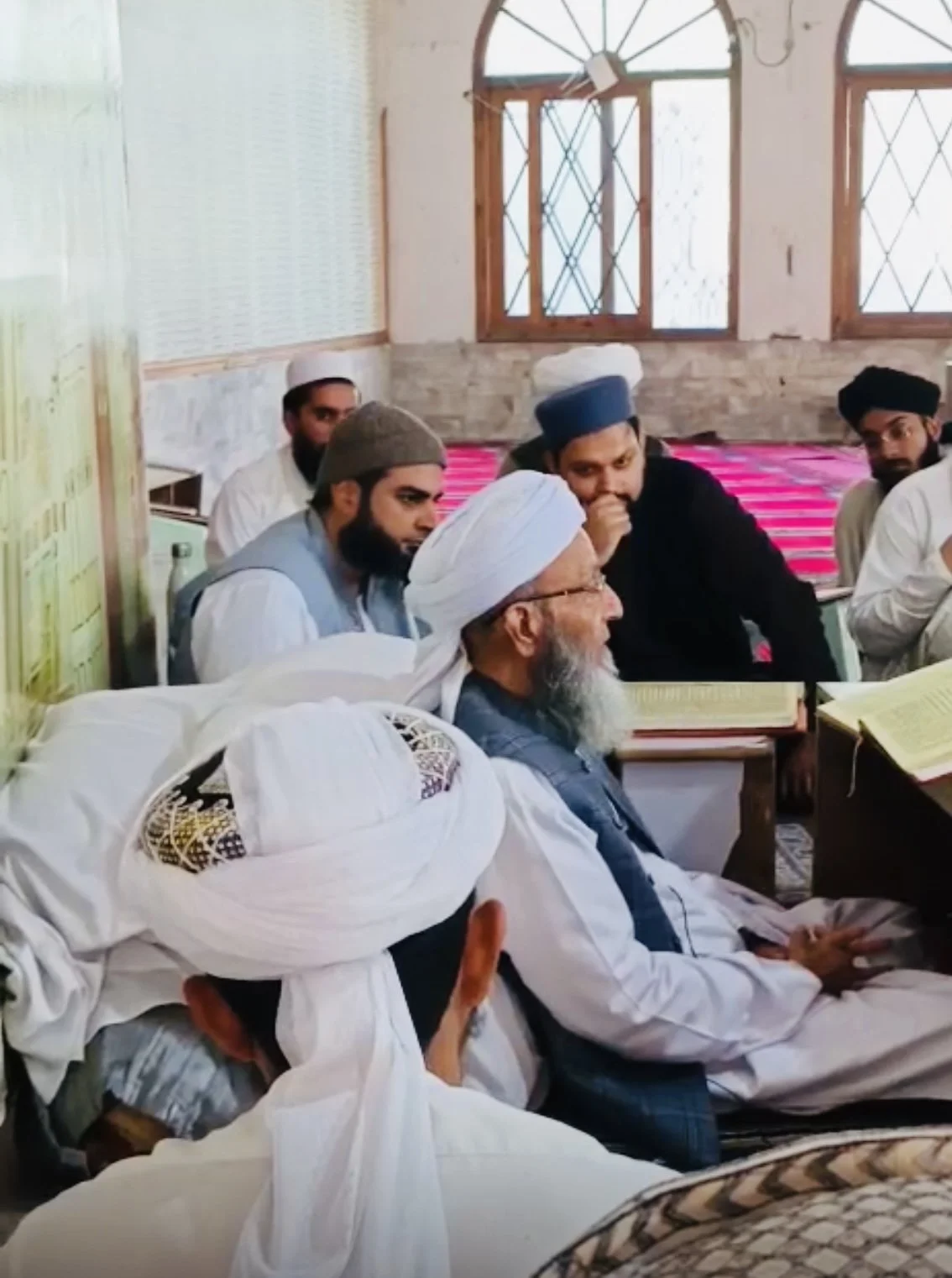
Among these was Sharḥ al-ʿAqāʾid al-Nasafiyyah. Drawing upon over sixty years of teaching experience, the Shaykh offered one of the clearest expositions of the masʾalah of takwīn, systematically outlining the respective positions, evidences, and dialectical exchanges of the Māturīdī and Ashʿarī schools of Sunni theology. Traditionally, this work is studied alongside Mullā Khayālī’s supercommentary, after which students progress to more advanced works of ʿilm al-kalām, such as Sharḥ al-ʿAqāʾid al-ʿAḍudiyyah and Mīr Zāhid al-Harawī’s supercommentary on the Umūr ʿĀmmah section of Sharḥ al-Mawāqif.
The second work on which the Shaykh delivered a masterclass was Qāḍī Mubārak al-Gopāmawī’s commentary on Sullam al-ʿUlūm, a text from the discipline of manṭiq mamzūj (mixed logic). Although works in this fann are classified as textbooks of logic, the discussions they contain are far broader in scope. This discipline incorporates advanced discussions in ontology, metaphysics, and kalām. Within this fann, scholars of the Farangī Maḥall tradition and the classical Dars-i Niẓāmī curriculum engaged with a sequence of works that ultimately culminated in Qāḍī Mubārak’s commentary as the final text. The most significant supercommentary on Qāḍī Mubārak’s work was written by Imām Faḍl al-Ḥaqq al-Khairabādī, and he held it in such esteem that he presented it as one of his principal scholarly accomplishments.
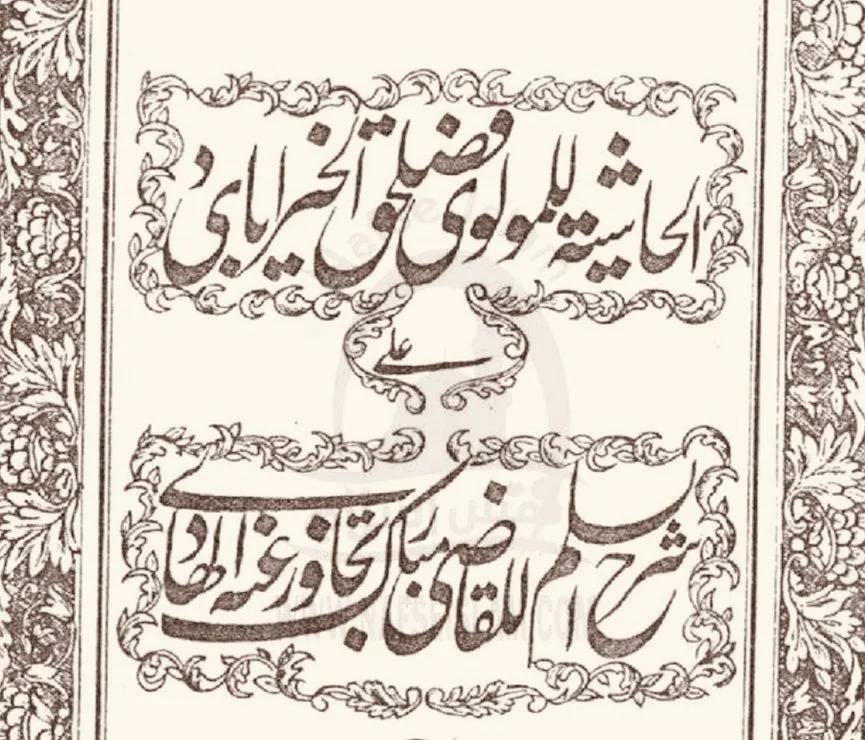
al-Ḥāshiyah li’l-Malawī Faḍl al-Ḥaqq al-Khairābādī ʿalā Sharḥ al-Sullam li’l-Qāḍī Mubārak
The teaching approach of Shaykh al-Hadith follows the Khairabādī style. After a portion of the text is read, the teacher delivers an advanced analytical exposition, conveying the deeper meanings of the passage. This taqrīr functions as a digestible presentation of the author’s intent, delivered in a manner accessible to the student.
Upon completing the taqrīr, the teacher does not merely translate the text, but systematically connects each element of the taqrīr back to the text itself. For example, when encountering a ḍamīr (pronoun), the teacher might say, “This part of my taqrīr corresponds to this ḍamīr.” Elsewhere, he might note, “This line addresses the objection I mentioned in my taqrīr”, and so on. In this way, the lesson solidifies the student’s understanding, enabling him to resolve the portion he may not have initially grasped the night before, during his preparation.
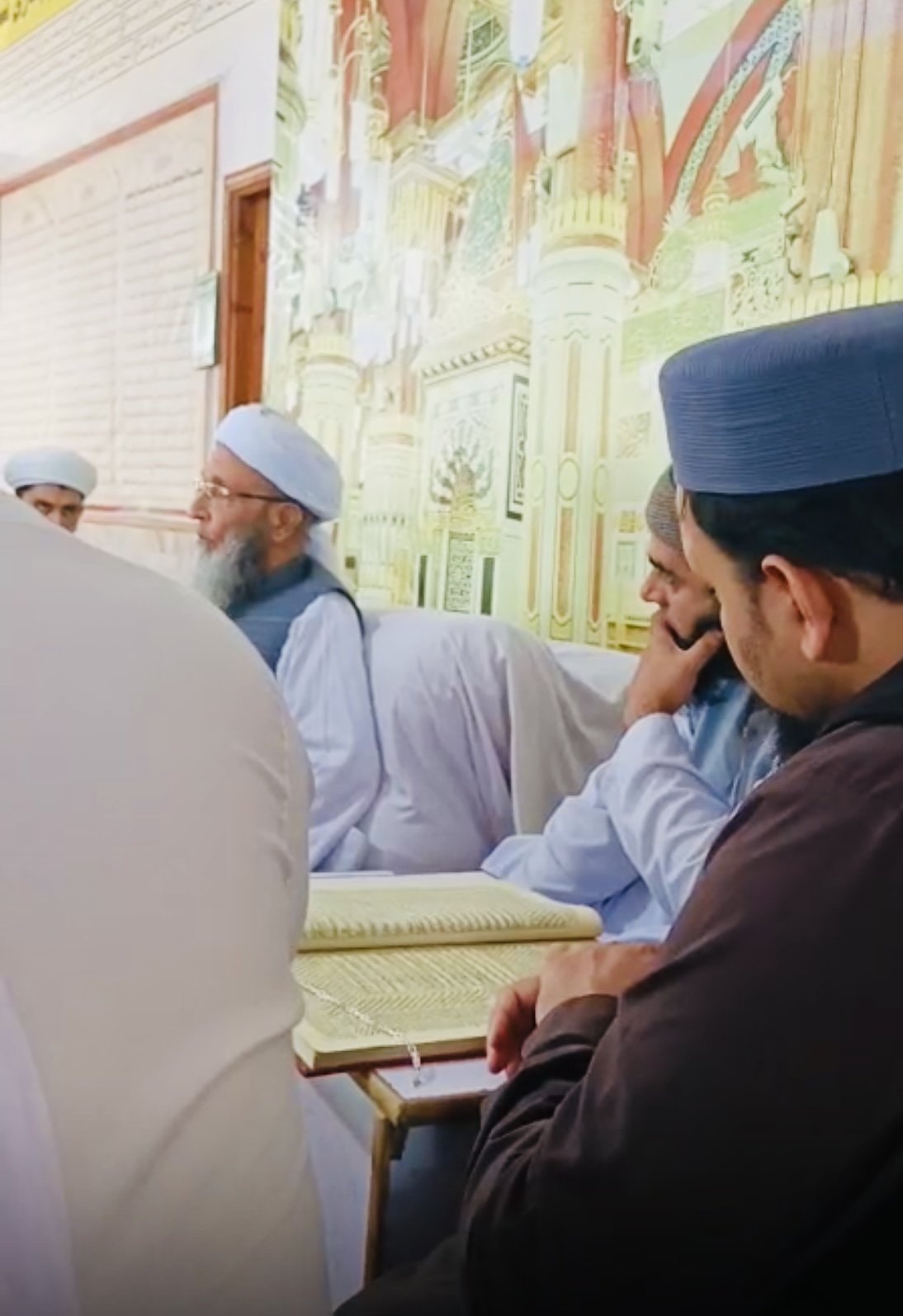
Through this method, students studying major core works - texts that today demand a level of rigour to which many students are no longer accustomed - not only complete these books, but become worthy of them and capable of transmitting their meanings.
This pedagogical tradition has continued within the Khairabādī silsilah (chain), which traces back to Imām Abū al-Ḥasan al-Ashʿarī through figures such as Mullā Dawānī, Mīr Sayyid Jurjānī, Imām al-Rāzī, Imām al-Ghazālī, and others.
The Farangī Maḥall tradition, and subsequently the Khairabādīs, succeeded in delivering the late-classical curriculum, achieving its objectives, and instilling a malakah (intellectual acuity) in students.
One reason for this success was their initial emphasis on working through centuries-old, time-tested primers across the various sciences, such as the Mīrian primers and others. This approach established a strong foundation while allowing students to cover substantial ground early on. This was due to the succinct and indicative style of these primers, which included summarised ishārāt (indications) to later discussions, even if only in outline. The outcome was that it enabled students to later engage meaningfully with works such as Sharḥ al-ʿAqāʾid, Mullā Khayālī, Qāḍī Mubārak, and similar texts.
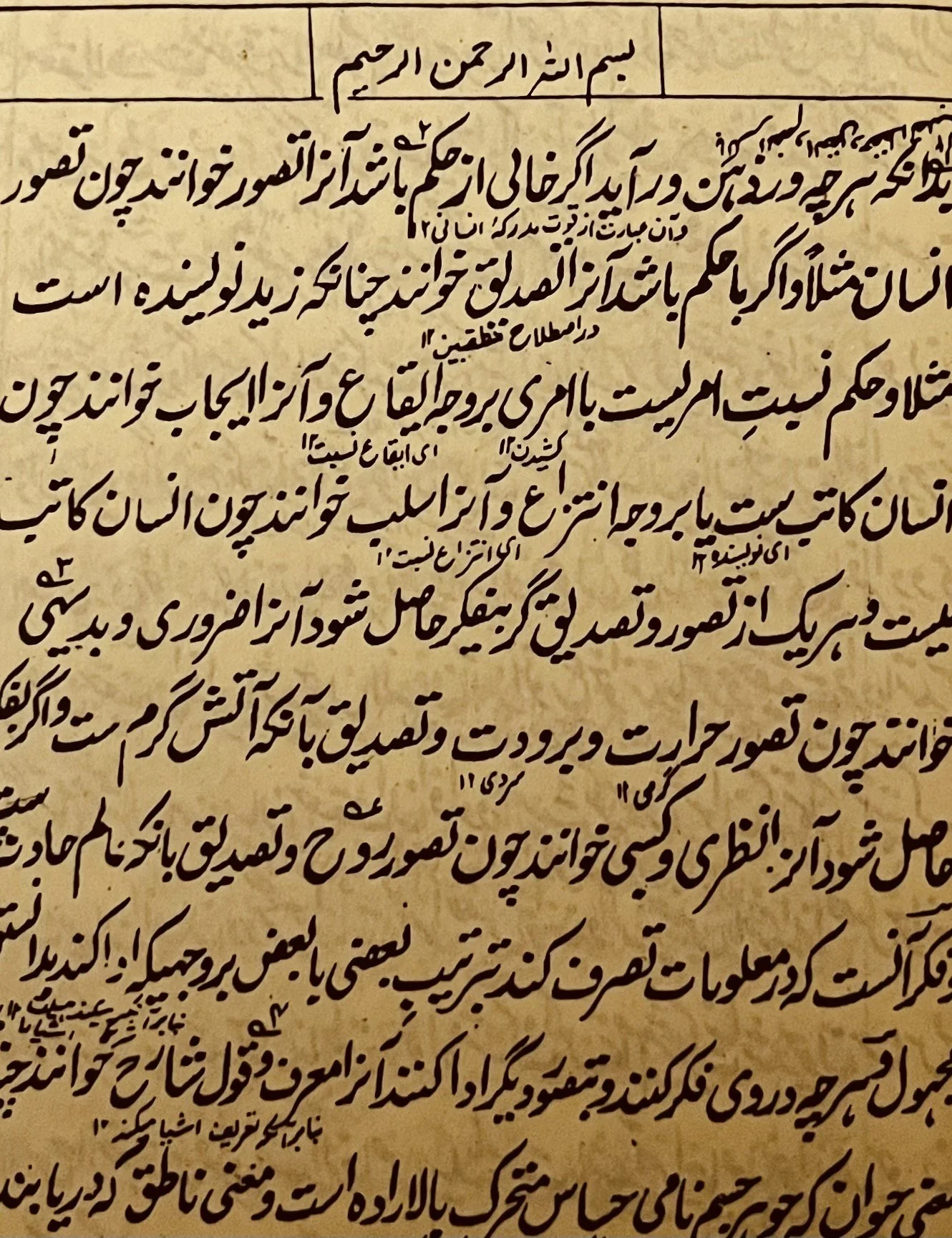
al-Ṣughrā: A classical primer in logic by Mīr Sayyid Sharīf al-Jurjānī, taught as the introductory text in logic in the Farangī Maḥall tradition
For more details on this method of learning, see Verified Solutions to Modern Intellectual Anxieties.
May Allah grant the Shaykh a long and healthy life. Āmīn.
Mā shāʾ Allāh wa lā quwwata illā bi’Llāh.
