

Ṣughrā and Kubrā in Logic
Mīr Sayyid Sharīf Jurjānī
Two Core Curricular Treatises in the Farangī Maḥall & Khairabādī Traditions
A Complete Study of Two Foundational Texts in Logic — in Persian and English

Course Overview
Have you ever felt that you haven’t fully grasped the mechanics of logic as a student of sacred knowledge?
Perhaps you’ve studied the qawāʿid (rules), yet still sense gaps in your understanding.
You may not fully appreciate the purpose of the subject, or you feel that your learning journey has left certain spaces unfilled.
Ṣughrā and Kubrā address all of these concerns in a way that Mīr Sayyid, writing from within the late-classical tradition, was uniquely positioned to offer. He teaches you the rules of logic while giving it shape as a coherent and purposeful discipline.
By taking this course, students will unlock a number of key logic texts appropriate to the level of the works studied in this programme, and be prepared to move on to more advanced texts in late-classical syllabi.
Style of Study
Ṣughrā and Kubrā will be taught in accordance with the Khairabādī pedagogy and method.
Students will be expected to prepare the upcoming passages, to the best of their ability, in advance. The instructor will then deliver a Khairabādī-style lecture, opening up the meanings of the text and clarifying the objectives of the author for the students. This lecture will then be fitted back into the text completely. Afterward, students will be required to memorise the lecture and demonstrate their ability to apply its insights back into the text themselves. In the tutorial sessions, students will also be expected to recite by memory the modules studied.
-
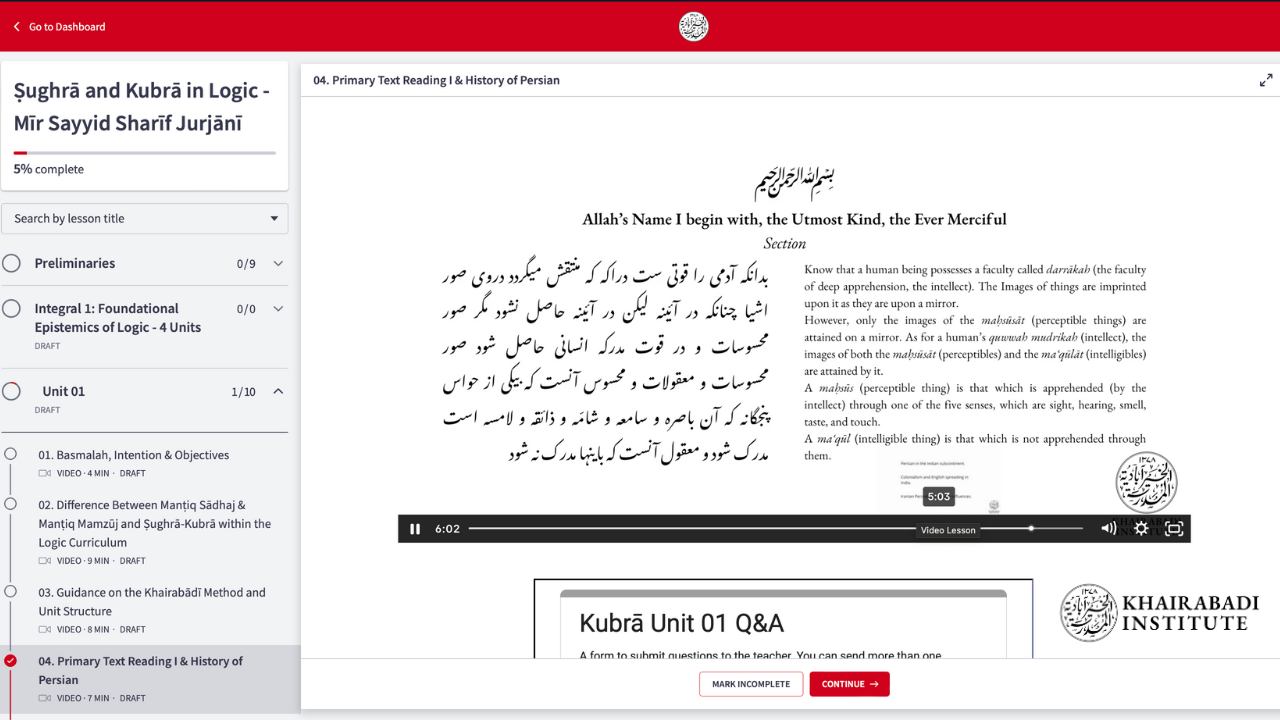
The primary text of study is Kubrā. After completing each unit, students return to the same topics in Ṣughrā, allowing them to review what they have learned and recognise how their understanding and malakah have developed. This second reading also prepares students to eventually teach Ṣughrā as a foundational primer for others.
Both texts are taught in their original Persian. An English translation of each text is provided, but instruction remains rooted in the Persian itself. As a result, students also acquire a significant grasp of Persian by the end of the programme.


A WORD FROM OUR PEERS
Mawlānā Mubashir is a person of high aspiration for serving tradition and embodying its high meanings." — Shaykh Mustafa Styer
— Shaykh Mustafa Styer
Course Outline
-
Unit 1: Introduction to Conceptions and Assents
The modules will feature the following topics:Introduction to conceptions and assents
Three relations of assents
Unit 2: Taxonomy of Knowledge and Intellectual Examination
The modules will feature the following topics:Types of conceptions and assents
Intellectual examination
Distinction between humans and animals
Defining speech and evidential argument
Unit 3: Indications and the Principles of Signification
The modules will feature the following topics:Indication and its types
Verbal significational indication and its types
Total correspondence, partial inclusion, and necessary implication
Indivisible and composite
Unit 4: The Logical Classification of Meaning: Conception and Assent
The modules will feature the following topics:Real and metaphor
Types of words
Simple expressions and composite expressions
Types of simple expressions
Types of composite utterances
Classifying expressions into conceptions and assents
Study of foundational epistemics of logic in Ṣughrā
Note: Each unit is further divided into several modules.
-
Unit 5: Universals and Particulars — The Structure of Conception
The modules will feature the following topics:Particular and universal
Five universals (up until differentia)
Unit 6: Consolidating the Structure of Universals
The modules will feature the following topics:Relative species
Specific property and general accident
Study of the five universals in Ṣughrā
Note: Each unit is further divided into several modules.
-
Unit 7: Classification of Expository Speech and Its Principles
The modules will feature the following topics:Definitions and descriptions
Metaphors and homonyms in definitions
Differentiation between universals
Study of the Five Universals in Ṣughrā
Note: Each unit is further divided into several modules.
-
Unit 8: Structures and Classification of Propositions
The modules will feature the following topics:Inquiry on propositions
Types of propositions
Technical names for parts of propositions
Unit 9: Complex and Modal Structures in Propositions
The modules will feature the following topics:Types of attributive propositions
Significant propositions in philosophical sciences
Metathetic and determinate propositions
Modal propositions
Unit 10: Conversion and Contradiction of Propositions
The modules will feature the following topics:Conversion of quantified propositions
Contradictory of propositions
Types of conditional propositions
Contradiction and conversion of conditional propositions
Study of propositions in Ṣughrā
Note: Each unit is further divided into several modules.
-
Unit 11: Evidential Reasoning and the Structure of Syllogism
The modules will feature the following topics:Types of evidential arguments
Syllogism and its types
Connective syllogism and its types
Unit 12: Productive Moods in the Figures of the Syllogism
The modules will feature the following topics:Conditions for productive moods of the first figure
Conditions for productive moods of the second figure
Conditions for productive moods of the third figure
Unit 13: Structure of Syllogism: Exceptive Syllogism and Its Types
The modules will feature the following topics:Types of exceptive syllogism
Study of the evidential argument in Ṣughrā
Note: Each unit is further divided into several modules.
How will the course be delivered?
The course is divided into five Integrals, each broken down into units. Each unit contains modules, a live tutorial, a question submission form, study resources, and an assessment.
Modules are short pre-recorded videos, each focused on a specific concept. Each video includes the teacher's taqrīr, a diagrammatic summary, and both the original Persian text and English translation.
Students have two weeks per unit to complete their study, after which they complete assessments and attend a live seminar-style tutorial on Zoom.

Reflections from Our Students
“I had the honour of studying Sughra and Kubra of Mir Syed Sharif Jurjani with our beloved teacher Mawlana Mubashir. It was an immense learning experience and helped me ground myself in mantiq.
It also helped me to have a glimpse of the maqoolat tradition and its significance in today’s world. I would recommend this for any sincere student of knowledge who wants to benefit from our tradition”.
Abu Taha, Lecturer, University of Westminster
About the Author: Mīr Sayyid Jurjānī
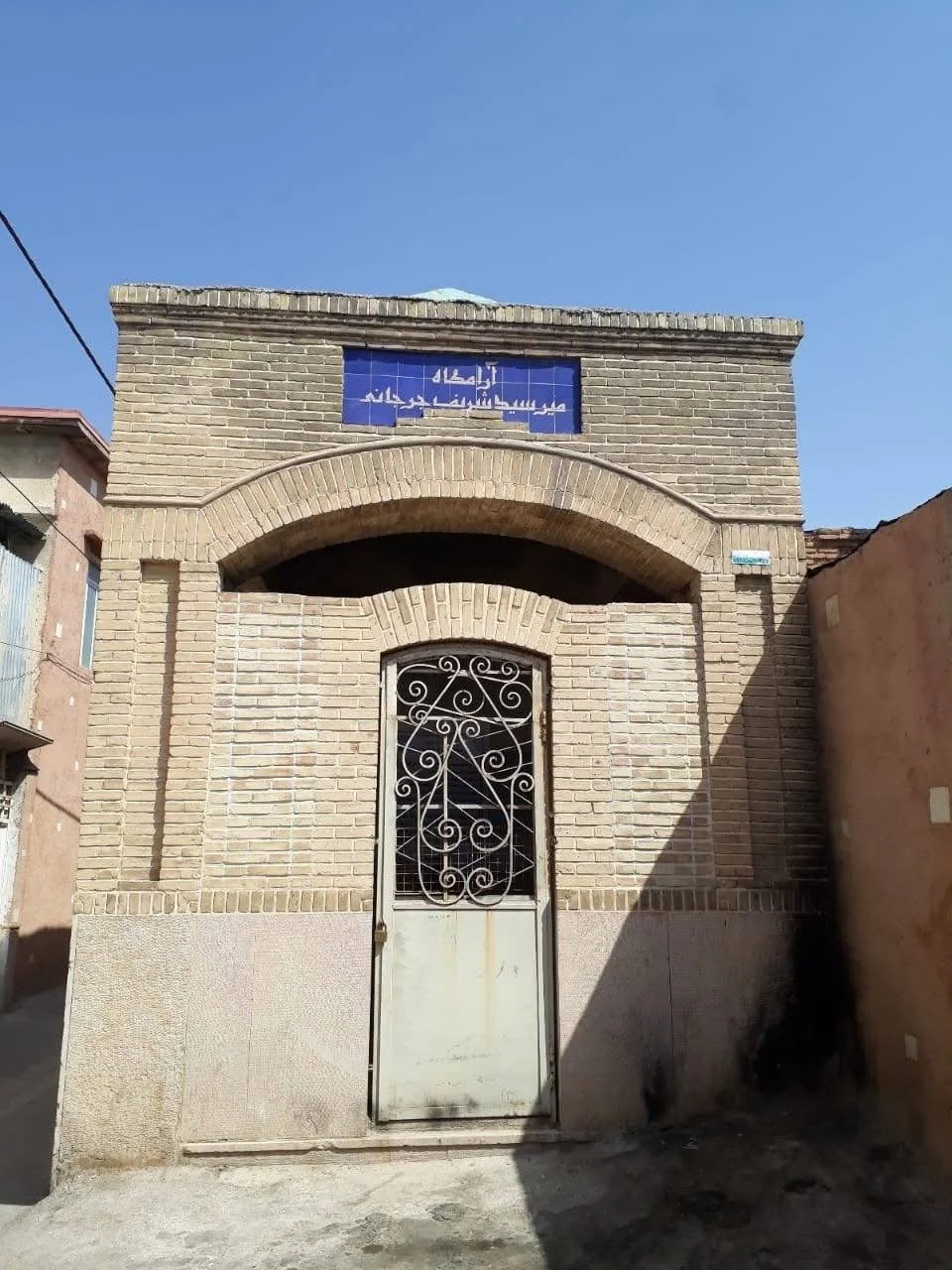
Mīr Sayyid Sharīf al-Jurjānī (d. 816 AH / 1413 CE) was one of the most influential Muslim scholars of the late-classical period. A Ḥusaynī in lineage, Ḥanafī in jurisprudence, and Ashʿarī in creed, he studied with luminaries such as ʿAllāmah Mubārak Shāh al-Manṭiqī and ʿAllāmah Akmal al-Dīn al-Bābartī. A master of both the rational and transmitted sciences, his intellectual authority was acknowledged across the Muslim world.
His writings became central to the madrasa tradition for centuries. From primers in grammar and logic to advanced works in kalām, Mīr Sayyid's texts shaped the curricula of Ottoman madrasas, al-Azhar, the Farangī Maḥall tradition in South Asia, and the Khairābādīs. His commentary Sharḥ al-Mawāqif in theology and his primers Ṣarf-i Mīr, Naḥw-i Mīr, Ṣughrā and Kubrā are only a few examples of works that became indispensable in the training of scholars.
About the Texts
Risāla-i Ṣughrā:
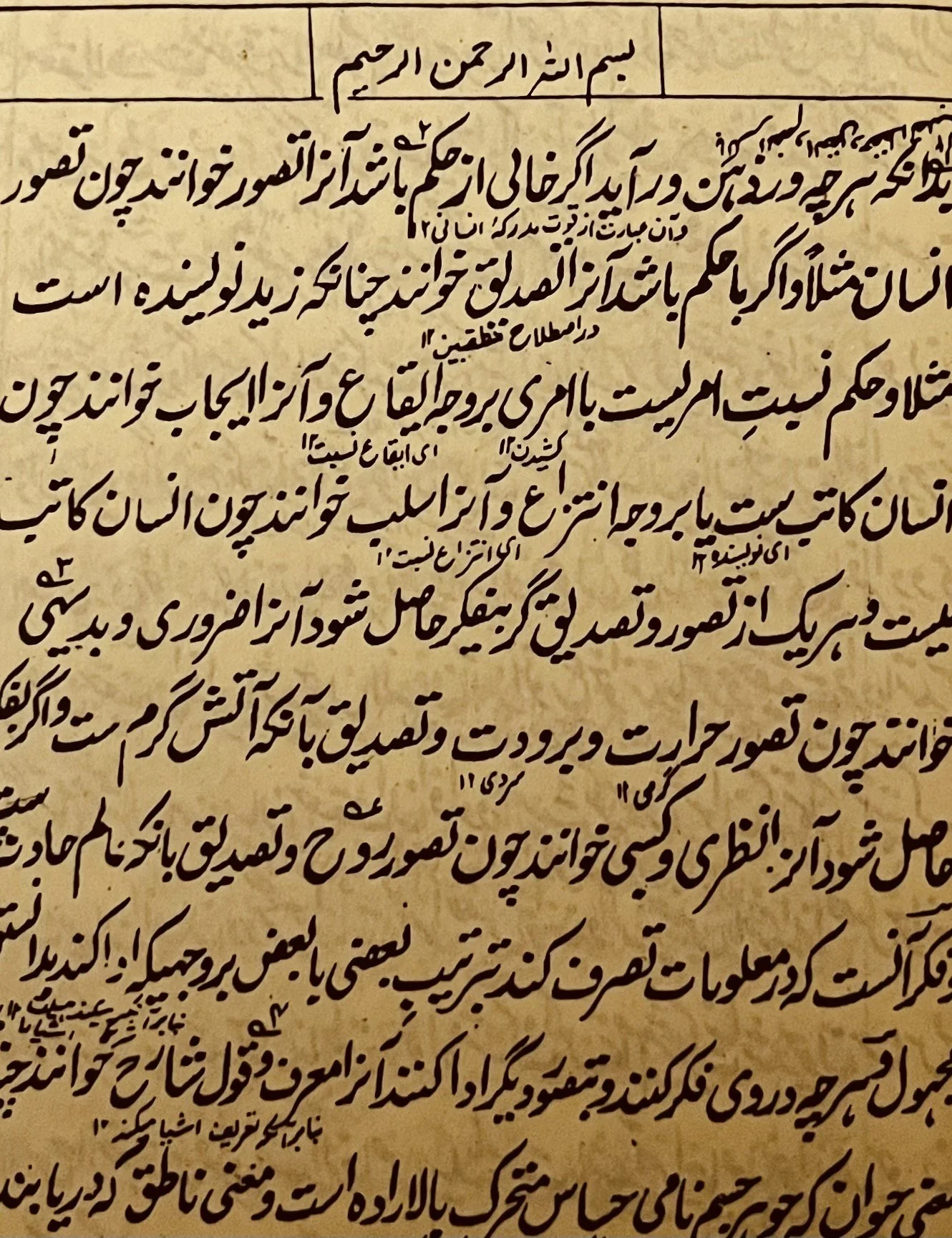
A short introductory handbook on logic in Persian, known as Ṣughrā ('Minor'). Mīr Sayyid authored it for his young son as a text to be committed to memory. Within the Farangī Maḥall curriculum, it served as the introductory text in logic. Its clarity and concise form make it an ideal entry point, better suited to beginners than the more commonly taught Īsāghūjī.
Risāla-i Kubrā:
A longer introductory handbook on logic in Persian, titled Kubrā ('Major'). Taught after Ṣughrā in the Farangī Maḥall sequence, Mīr Sayyid builds a coherent and purposeful framework that enables logic to be grasped not merely as abstract theory but as a practical, living tool. After studying Kubrā, a student would find Īsāghūjī to serve as revision and would complete it with proficiency.
-
Arranged into thirty-five sections, it is structured so as to ‘tell the story’ of logic, guiding the student toward a more thorough understanding of its aims. After studying this text, a student would no longer need to study Isāghūjī to progress in the field of logic; if he were to study it nonetheless, he would find the discussions therein to serve as a revision and would complete it with proficiency. Moreover, moving on from Kubrā to a more advanced text beyond Isāghūjī would be a natural progression.
Conversely, a student who has only studied Isāghūjī would find that engaging with Kubrā significantly deepens comprehension of the discipline, adds further refinements, and clarifies many questions; an outcome owed largely to Mīr Sayyid’s distinctive organisation and writing style.
Reflections from Our Students
“I had studied a few books of mantiq before joining this course, yet I still gained immense benefit — my existing foundations were solidified, I was exposed to deeper discussions I hadn't previously come across, and the course bridged gaps in my knowledge. I cannot recommend this course enough.”
Mohammed Hasnain, Student
Who is this course for?
Beginners in logic who are new to the subject.
Students who have already studied logic but wish to fill gaps and strengthen their foundations.
Those who have studied only Īsāghūjī or an introductory English manual and wish to progress further.
Anyone intending to study advanced maʿqūlāt such as ʿIlm al-Kalām, falsafa, or late-classical mixed logic.
No prior knowledge of logic, Arabic, or Persian is required. English translations of both texts will be provided.
Learning Outcomes
By the end of this course, students will:
Develop a foundational and structured understanding of classical logic (manṭiq)
Recognise the underlying framework and purpose of logic
Read and engage with other classical logic texts with confidence
Strengthen malakah (intellectual acuity)
Fill key conceptual gaps from prior logic study
Build readiness for advanced maʿqūlāt (e.g. ʿIlm al-Kalām, falsafa, manṭiq mamzūj)
Progress toward the next logic works in the Dars-i Niẓāmī curriculum
About the Instructor

Shaykh Muhammad Mubashir Iqbal teaches within the Khairābādī pedagogical tradition, with a focus these days on structured entry into the classical sciences. His teaching emphasises the pedagogical methods passed down within this tradition alongside faithful transmission of the late-classical curriculum.
He began his studies at the age of eleven at Jamʿia al-Karam, where he spent a decade before also teaching Arabic in his final years. He went on to study Persian texts and advanced Dars-i Niẓāmī works at Dārul Qurrāʾ and Islamic Research Centre in England, and later engaged with scholars of diverse backgrounds in Istanbul, including scholars of Shām.
He pursued Ḥadīth studies at Dār al-ʿUlūm Muḥammadiyyah Ghawthiyyah in Bhera, Pakistan, and completed the final books of the classical Dars-i Niẓāmī curriculum at Jamʿia Qādiriyyah in KPK, including al-Hidāyah, Mīr Zāhid Umūr al-ʿĀmmah, Mīr Quṭbī, Shams-i Bāzigah, and commentaries on Sullam al-ʿUlūm.
His sanad in the rational sciences traces back to Imām Fazl-i Ḥaq Khairābādī, Mullā Niẓām al-Dīn Sihālwī, Mīr Sayyid Jurjānī, ʿAllāmah Mubārak Shāh, Qāḍī ʿAḍud al-Dīn al-Ījī, Imām Abū Ḥāmid al-Ghazālī, and Imām Abū al-Ḥasan al-Ashʿarī, may Allāh have mercy upon them all.
With extensive teaching experience, he excels in the classical Khairābādī/Farangī Maḥallī curriculum. He has disseminated his knowledge in various seminaries across England, including Greengate Islamic College, Cambridge Muslim College, and Manchester Muslim College, leaving an indelible mark on his students.
Shaykh Muhammad Mubashir Iqbal
Founder of Khairabadi Institute
Course Details
Enroll Now
Begin Immediately and Study at Your Own Pace
Content: 240+ modules across 13 units, comprising 30+ hours of recorded teaching with diagrams
Tutorials: 13 fortnightly seminar-style sessions on Zoom, with recordings available
Questions: Structured submission system with answers organised by unit
Assessments: End-of-unit quizzes and taqrīr-based assignments
Telegram: Student group with direct access to the instructor
Materials: Original Persian texts, English translations, study guides, and welcome pack
Access: Lifetime access to all materials
£199.99 — One-Time Enrollment
Monthly payment option: £40/month × 6 (includes a small administrative charge)
Upon enrollment, students will receive a welcome pack containing all details, including tutorial session dates, ebooks, resources, Telegram group access, guidelines, and schedules.
Secure online payment • Immediate confirmation • Instant access to course portal
By signing up for this course, you acknowledge that you have read and agree to our Enrollment Terms & Conditions.